Trying to choose between Lenexa, Overland Park, Olathe, and Shawnee? You are not alone. Many buyers looking in Johnson County find that these suburbs can seem similar at first, but the day-to-day experience can feel very different once you look at housing, commute patterns, amenities, and price. This guide will help you compare the trade-offs clearly so you can narrow in on the suburb that fits your lifestyle and home goals best. Let’s dive in.
Start With the Big Picture
If you are comparing these four suburbs, it helps to begin with a simple truth: there is no universal “best” choice. The right fit depends on what matters most to you, whether that is recent home prices, housing variety, access to parks, or how you want your daily routine to feel.
A recent April 2026 market snapshot shows Lenexa with the highest median sale price of the group at $510,286. Overland Park followed at $479,752, Olathe at $474,755, and Shawnee at $434,775. In that same snapshot, Shawnee had the fastest pace at about 6 days on market, followed by Overland Park at 11 days, Olathe at 16 days, and Lenexa at 37 days.
That does not mean one city is always more expensive or faster than another. It does mean these suburbs are not identical, and those differences can shape both your budget and your buying strategy.
Lenexa at a Glance
Lenexa can be a strong fit if you want a suburb with a visible town-center feel, convenient highway access, and a mix of established and newer housing areas. The city combines older residential areas with newer development, especially around Lenexa City Center.
According to Lenexa’s Vision 2040 materials, much of the city’s housing was built in the 1970s and 1980s. The housing stock is primarily single-family detached, and many homes have three or four bedrooms with two-story layouts. If you like the idea of a mostly suburban feel with some newer mixed-use energy, Lenexa often stands out.
Lenexa housing feel
Lenexa offers a blend of old and new. Old Town Lenexa includes homes that are more than 100 years old, while Lenexa City Center is a newer district anchored by City Hall, the Public Market, the Rec Center, and other civic uses.
That gives Lenexa a more layered feel than a suburb that developed all at once. You may find that one part of the city feels historic and established, while another feels newer and more connected to shopping, events, and civic spaces.
Lenexa commute and access
Lenexa is especially appealing if road access matters to you. The city highlights access to I-70, K-10, I-35, U.S. 69, K-7, and I-435, with City Center near the junction of several major routes.
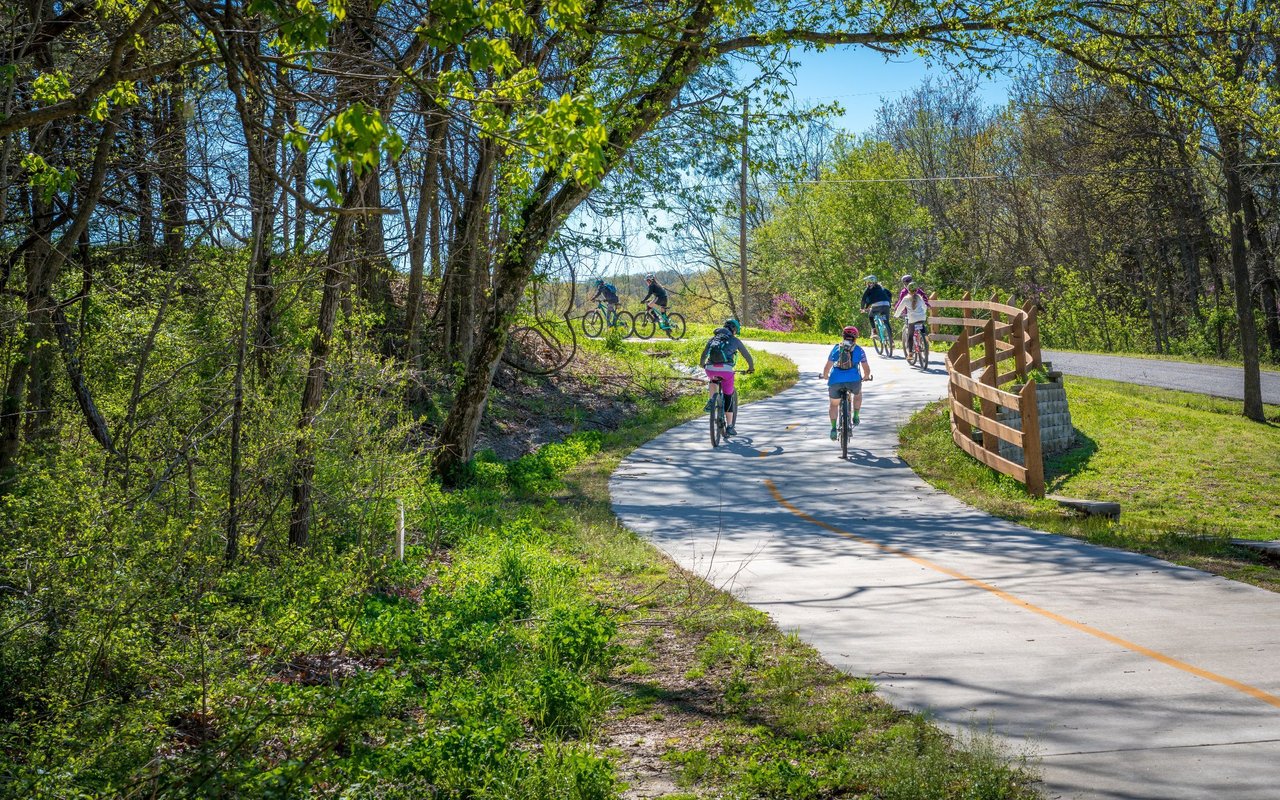
It is still largely car-oriented, but Lenexa also manages more than 45 miles of hiking and biking trails. If you want strong regional access with some growing trail and pedestrian options, Lenexa checks that box.
Lenexa amenities
Lenexa’s most visible amenity hub is City Center. The Public Market, Rec Center, library branch, farmers market, and community events create a central gathering area that many buyers find appealing.
Outside City Center, Sar-Ko-Par Trails Park adds even more outdoor appeal with trails, a skate park, disc golf, aquatic amenities, and museum space. If you want a suburb with a recognizable center of activity, Lenexa offers that more clearly than many nearby areas.
How Shawnee Compares
Shawnee often appeals to buyers who want established neighborhoods, strong park access, and a lower recent median sale price than the others in this comparison. In the April 2026 snapshot, Shawnee had the lowest median sale price of the four at $434,775.
That lower recent median does not automatically mean every home is less expensive. It does suggest Shawnee can be worth a close look if you want more options at different price points while staying in this part of Johnson County.
Shawnee housing feel
Shawnee emphasizes housing diversity. City materials describe older established neighborhoods, newer subdivisions, lakeside homes, country estates, condominiums, townhomes, and senior developments.
That range can be helpful if you are still deciding what type of property fits your next chapter. Shawnee’s Neighborhood Focus program also reflects the city’s established-neighborhood character, especially in areas without HOAs.
Shawnee mobility and outdoors
Shawnee’s transportation pattern is shaped by I-435, I-35, Shawnee Mission Parkway, and K-7. It is still a drive-oriented suburb, but it also has a notable bike and trail network.
The city reports 18 miles of on-street bike lanes, 40.8 miles of shared roadways, and 27.6 miles of off-street recreational trails. If access to outdoor movement matters in your daily routine, Shawnee has a strong case.
Shawnee amenities
Shawnee has a very active parks and recreation presence. The city oversees more than 1,010 acres of parks, two aquatic facilities, the Civic Centre, and Shawnee Town 1929, along with more than 500 classes, programs, and special events each year.
If you want a suburb where parks, trails, and local programming are part of everyday life, Shawnee may feel especially comfortable. It tends to attract buyers who value an active local rhythm and established community spaces.
How Olathe Compares
Olathe is a broad-growth market with a wide mix of housing types, neighborhood ages, and city amenities. It can be a strong match if you want options and do not want to be boxed into one housing style or one type of neighborhood experience.
The city’s housing profile shows a mix that is mostly single-family at 69.8%, along with townhomes, apartment complexes, small apartment buildings, and mobile homes. Historical materials also point to older Original Town areas as well as substantial new construction from the 1990s and later.
Olathe housing variety
Olathe’s planning goals include attainable and diverse housing options. For buyers, that means the city is not defined by only one era of development or one home type.
You may find older areas with more established character, newer subdivisions, and attached housing options all within the same city. That flexibility can be valuable if your budget, layout needs, or maintenance preferences are evolving.
Olathe commute profile
Olathe is strongly tied to I-35, and the city has current projects at I-35 and Santa Fe and I-35 and 119th aimed at improving safety and traffic flow. For many buyers, the commute story here is still centered on highway access.
At the same time, Olathe reports 47 miles of public trails, 27 miles of bike lanes, and 7 miles of signed shared roadway. So while it is not a walk-everywhere suburb, it does offer more non-car infrastructure than some buyers expect.
Olathe amenities
Olathe’s amenity mix combines downtown activity, recreation, and heritage attractions. Downtown Olathe brings together government, professional services, restaurants, and small businesses, with free garage and surface parking.
Lake Olathe Park is another major draw, with a 170-acre lake and 258 acres of surrounding park space. The city also reports 40 neighborhood and community parks and 3,596 acres of park land, which gives Olathe a broad and practical recreation base.
How Overland Park Compares
Overland Park often stands out for its range. If you want the broadest mix of neighborhood types and a mature amenity network, it is hard to ignore.
Official planning materials describe traditional neighborhoods north of I-435, suburban neighborhoods with primarily single-family homes, and rural neighborhoods in the south with larger-lot residential and agricultural character. That makes Overland Park especially useful for buyers who want choices within one city.
Overland Park housing options
Among these four suburbs, Overland Park has the clearest official description of different neighborhood types. Some areas offer a more close-in and mixed residential pattern, while others feel like classic suburban subdivisions, and some southern areas retain a larger-lot setting.
If you are not sure whether you want an older traditional neighborhood, a conventional suburban setting, or something with more space, Overland Park gives you room to compare several living styles without leaving the city.
Overland Park transportation feel
Overland Park’s official materials emphasize roads, public transportation, bicycling, safe-streets planning, and walkability projects such as OP Central. That suggests a more varied mobility experience than the other suburbs in this group.
Some parts of Overland Park may feel more mixed-use and connected, while others are more typical drive-oriented residential areas. If your goal is flexibility, that variety can be a plus.
Overland Park amenities
Overland Park has one of the most developed amenity rosters in this comparison. The city highlights a large parks-and-trails system, the Arboretum & Botanical Gardens, Deanna Rose Children’s Farmstead, and the Farmers Market as major attractions.
For buyers who want a lot of everyday options, Overland Park often feels especially established. It can be a strong fit if access to recreation, events, and well-known local destinations is high on your list.
Which Suburb Fits Your Priorities?
The easiest way to compare these cities is to focus on the trade-offs that affect your daily life most.
If price is your first filter
Based on the April 2026 snapshot, Shawnee had the lowest recent median sale price and Lenexa had the highest among the four. Overland Park and Olathe were close to one another in the middle.
If you are stretching for space or trying to keep monthly costs in line, Shawnee and Olathe may deserve extra attention. If you are drawn to Lenexa, it may help to be clear early on about your budget range and must-have features.
If housing variety matters most
Overland Park and Olathe stand out for variety. Overland Park’s planning framework describes traditional, suburban, and rural neighborhood types, while Olathe’s housing profile shows a broad mix of single-family homes, townhomes, and apartments.
Shawnee also offers a diverse mix, from older neighborhoods to townhomes and other housing settings. Lenexa is more defined by its blend of established single-family areas and newer destination-style development.
If you want a strong town-center feel
Lenexa may be the easiest standout here because of City Center. The concentration of civic uses, events, and amenities gives it a more obvious central hub.
Olathe also offers a downtown presence, while Overland Park’s experience depends more on which part of the city you choose. Shawnee’s appeal leans more toward parks, trails, and established neighborhood identity than a single focal district.
If outdoor amenities are a top priority
All four suburbs offer meaningful outdoor options, but the style is different in each one. Lenexa centers activity around City Center and Sar-Ko-Par Trails Park, Shawnee around its parks and trail network, Olathe around Lake Olathe and citywide recreation, and Overland Park around its broad parks-and-trails system and major attractions.
Your best fit depends on whether you want one standout park, a trail-heavy routine, lake recreation, or a long list of established destinations.
A Simple Way to Decide
If you are still torn, try ranking these five factors from most important to least important: price, commute pattern, housing age, home type, and nearby amenities. That simple exercise can make your next step much clearer.
You do not need to find the “perfect” suburb on paper. You need to find the place that best supports your routine, budget, and future plans.
If you want help comparing Lenexa with Shawnee, Olathe, or Overland Park based on your price range and goals, Andrea Plowman can help you build a clear, low-stress plan and schedule a consultation.
FAQs
How does Lenexa compare to nearby suburbs on home prices?
- In a recent April 2026 snapshot, Lenexa had the highest median sale price of this group at $510,286, while Shawnee had the lowest at $434,775. Overland Park and Olathe were in between.
Which Johnson County suburb has the most housing variety?
- Overland Park stands out for its officially defined traditional, suburban, and rural neighborhood types, while Olathe also offers a broad mix of single-family homes, townhomes, and apartments.
Is Lenexa a good fit if you want a town-center feel?
- Lenexa can be a strong fit if you want a visible central hub because City Center brings together civic buildings, the Public Market, the Rec Center, events, and other gathering spaces.
Which suburb is best for parks and outdoor amenities near Lenexa?
- All four offer strong outdoor amenities, but the experience differs: Lenexa is known for City Center and Sar-Ko-Par, Shawnee for parks and trails, Olathe for Lake Olathe and citywide parks, and Overland Park for a broad park and attraction network.
How should you choose between Lenexa, Shawnee, Olathe, and Overland Park?
- Start by ranking your priorities for price, commute pattern, housing style, neighborhood feel, and amenities, then compare suburbs based on the trade-offs that matter most to your daily life.